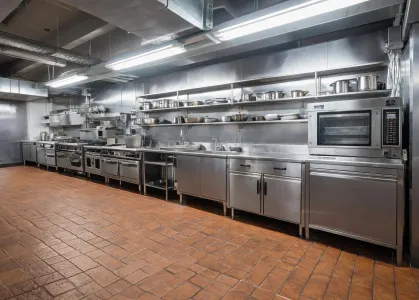
Commercial kitchens
Prioritize slip resistance coefficient, grease cleanability, and thermal cycling near ranges. 1/2 in quarry formats remain a workhorse when mop chemistry is aggressive and movement joints sit at fryer lines.
Porcelain tile, quarry tile, and quartz surfaces specified for commercial kitchens, hospitality, healthcare, multifamily, and aquatic facilities—each with distinct abrasion, moisture, and cleanability demands.
Discuss Your ApplicationSector pillars
Prioritize slip resistance coefficient, grease cleanability, and thermal cycling near ranges. 1/2 in quarry formats remain a workhorse when mop chemistry is aggressive and movement joints sit at fryer lines.
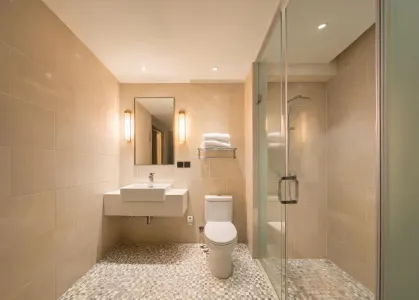
Guest baths and corridors need shade-lot consistency, abrasion resistance (PEI class by luggage traffic), and wet DCOF (ANSI A326.3) documentation for brand standards reviews.

Specify low water absorption porcelain (≤0.5% body class) with joint systems that tolerate frequent disinfection while supporting mobility and maintenance protocols.
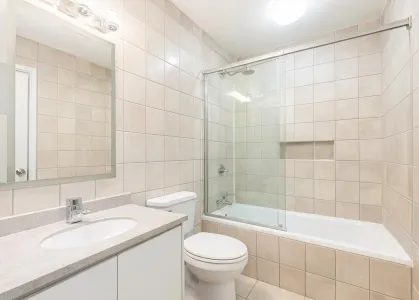
Unit baths and kitchens favor porcelain and quartz that survive turnover cleaning without natural-stone resealing—lot-control notes keep 100+ unit packages shade-aligned.
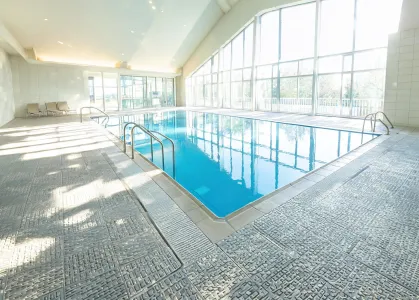
Aquatic edges demand SKU-specific freeze-thaw awareness outdoors and documented wet DCOF indoors—pair mosaics and field tile with drainage slopes and membranes.
Transformation cases
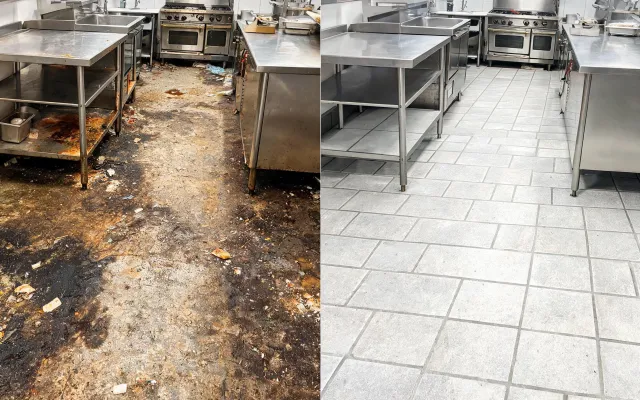
Background: A 42-location regional restaurant group saw glaze wear and joint failure within 14–18 months on grease-line floors where mop chemistry and fryer radiant heat stacked. Process: Specifiers rewrote Division 09 around Daltile quarry tile (1/2 in formats), documented mortar beds, movement joints at equipment zones, and cleaner pH limits for night crews. Result: Punch-list callbacks for lifted corners dropped through the first service year, and facility managers kept the same slip resistance coefficient target without switching to resin overlays.
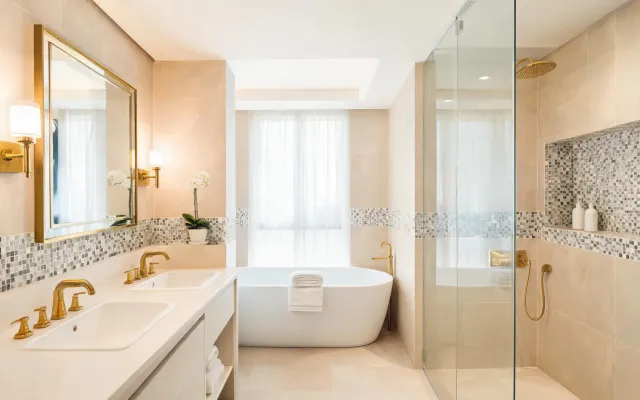
Background: An 180-key boutique renovation opened a natural-marble vs. marble-look porcelain debate for guest baths under tight FF&E budgets. Process: The team compared UV stability of printed veining, impact resistance near amenity carts, wet DCOF (ANSI A326.3) on the selected finish, and GREENGUARD Gold letter scope against resealing labor for natural stone. Result: Porcelain field tile with mosaic accents locked brand aesthetics while cutting resealing cycles and keeping indoor-air documentation intact for brand standards reviews.
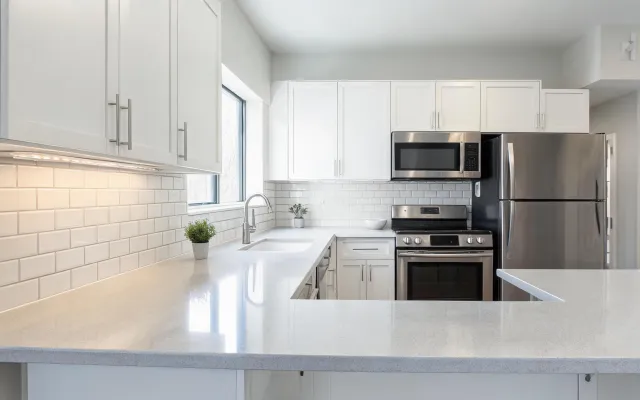
Background: A 240-unit mid-rise faced import-slab lead times of 10–14 weeks against a fixed TCO window. Process: Procurement standardized Daltile quartz vanities (compressive strength in the 20,000+ PSI class; NSF/ANSI 51 on select SKUs) and porcelain floors sourced through Stone & Slab Centers, with lot-control notes written into unit packages. Result: Replenishment cycles shortened versus overseas slabs, change-order color matches stayed within shade lots, and turnover cleaning no longer required natural-stone resealing between leases.
Natural stone side: Unique aesthetics, authentic material character, and higher perceived value that printed porcelain cannot fully replicate—valid when the owner budgets for sealing and accepts shade variation. Engineered surfaces side: Superior consistency, lower maintenance, tighter stain/scratch expectations, and clearer VOC emissions documentation—valid when multifamily or hospitality turnover cleaning is the real lifecycle cost. Daltile publishes water absorption rate, slip resistance coefficient, compressive strength, flexural strength, and care limits for both paths so the finish schedule records the trade-off explicitly.
Sustainability-first buyers argue lifecycle savings and LEED contribution letters justify premiums; budget pragmatists note that many green document stacks add cost without proportional ROI when code-compliant ceramic already meets minimum environmental thresholds. Selection dimensions we put on every shortlist: traffic class (PEI), wet DCOF method, lead time (domestic plant vs. import), maintenance labor hours/year, and certificate scope matched to the purchased SKU—not a sibling line.
Application limits: Quarry and porcelain floors still need correct slope and membranes where moisture vapor transmission is high; outdoor freeze-thaw is SKU-specific; polished finishes may miss wet DCOF gates even when the body is impervious; quartz spans require support design regardless of compressive strength headlines.
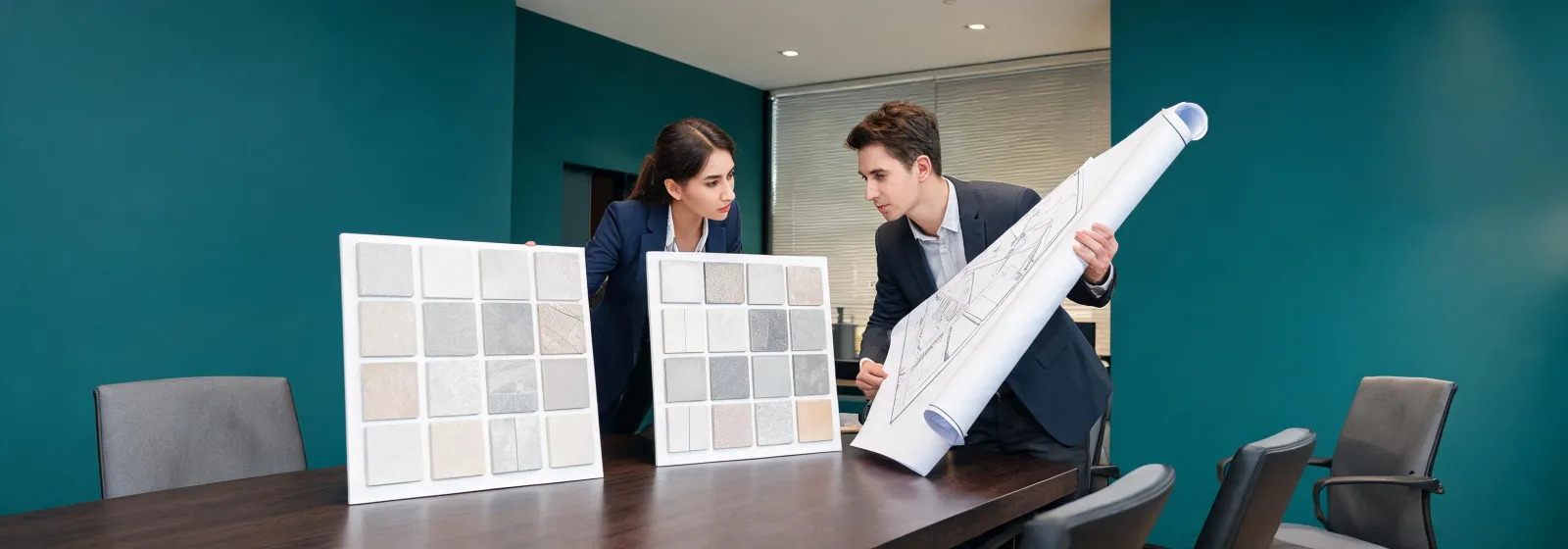
Describe traffic, moisture, and cleanability requirements—we will recommend collections and documentation packages.